HVAC SEO helps a heating, ventilation, and air conditioning business appear in unpaid search results when customers look for the services it provides. It brings together your Google Business Profile, website, service information, reviews, and local credibility so people can find your company and request help.
For an HVAC owner, the useful outcome is a relevant inquiry your team can turn into a service visit or installation assessment. An urgent AC repair, a planned furnace replacement, and a maintenance agreement require different information and follow-up. A good SEO plan accounts for those differences.
This guide explains how to choose priorities, build useful pages, represent your service area accurately, prepare for seasonal demand, and measure results. The searches and business scenarios are illustrative examples, not keyword-volume estimates or documented RankVigor client results.
Start with the HVAC work you want more of
Before choosing keywords, talk with the people who answer the phone and schedule technicians. Which requests fit your capabilities? Which areas can your crews reach? Which services need more demand, and which already exceed your capacity?
An HVAC business might want more replacement assessments while its repair calendar is full. Another may want maintenance appointments between busy periods. A company serving commercial properties needs to distinguish those inquiries from residential service calls. Your page priorities should follow the work you can deliver.
Search intent means what someone is trying to accomplish. A person looking for an AC repair company needs a provider and a contact route. Someone comparing replacement options may need an explanation before arranging an assessment. A general HVAC homepage is unlikely to answer both needs thoroughly.
| Illustrative search | Likely need | Suitable page and next step |
|---|---|---|
| AC repair in Phoenix | Find a local repair provider | AC repair page with actual coverage and a call option |
| furnace replacement company | Arrange a replacement assessment | Installation page explaining the assessment and estimate process |
| heat pump installation near me | Find a company offering that service | Heat pump page with genuine capabilities and an inquiry form |
| HVAC maintenance plan | Understand ongoing service | Maintenance page with inclusions, terms, and a signup inquiry |
| commercial HVAC maintenance | Find support for business premises | Commercial page with equipment scope and a property inquiry route |
These examples do not establish demand in a particular market. Use customer questions, your existing inquiry records, and current search results to decide which page a query needs. Include a city only when the business actually serves it.
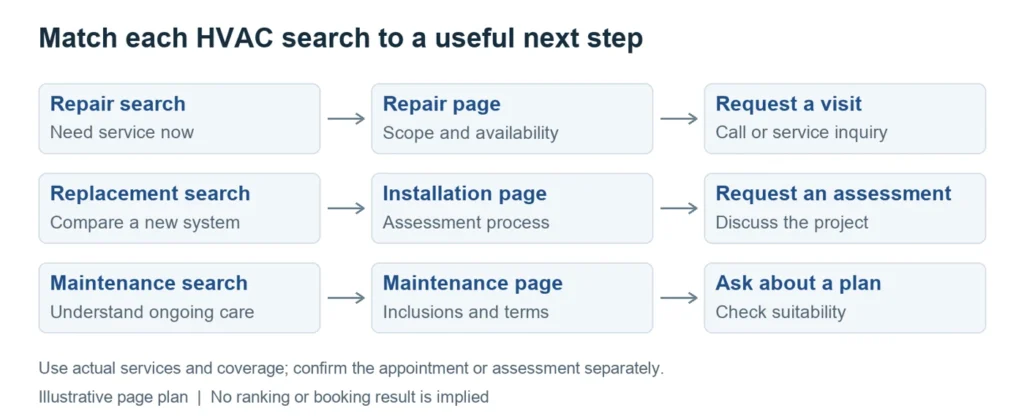
Start with a small set of important services. If several phrases describe the same work and customer need, one complete page can cover them naturally. Separate pages make sense when the service, audience, or next step meaningfully differs.
Represent your business accurately on Google
Your Google Business Profile helps people discover the company in local results on Search and Maps. Ordinary website results and paid ads are separate opportunities. A stronger profile does not guarantee that every service page will rank, and an advertising budget does not buy better organic local placement.
Google's local ranking guidance describes relevance, distance, and prominence. Keep details accurate so Google can understand the business. Reviews and links can contribute to prominence. Distance depends on the searcher's location, so one map ranking screenshot cannot show visibility throughout your service territory.
Use your real-world business name. Choose categories that describe the actual core business, without adding unrelated categories or city keywords to the name. Keep contact details and hours current. Google's representation guidelines explain these requirements.
If crews travel to customers and customers are not served at your address, follow Google's service-area setup instructions and remove the address from public display. List real coverage; adding an area does not guarantee visibility there.
Do not create a profile for every town you visit. Google's representation guidelines allow separate service-business profiles for separate locations with their own staff and service areas. A rented mailing address where you do not operate is not an eligible location. Check the full requirements for each real location.
Keep regular hours, special hours, and emergency availability truthful. A company that accepts an overnight message but dispatches technicians the next morning should explain that distinction on its website. Do not advertise 24-hour service unless the business can provide it.
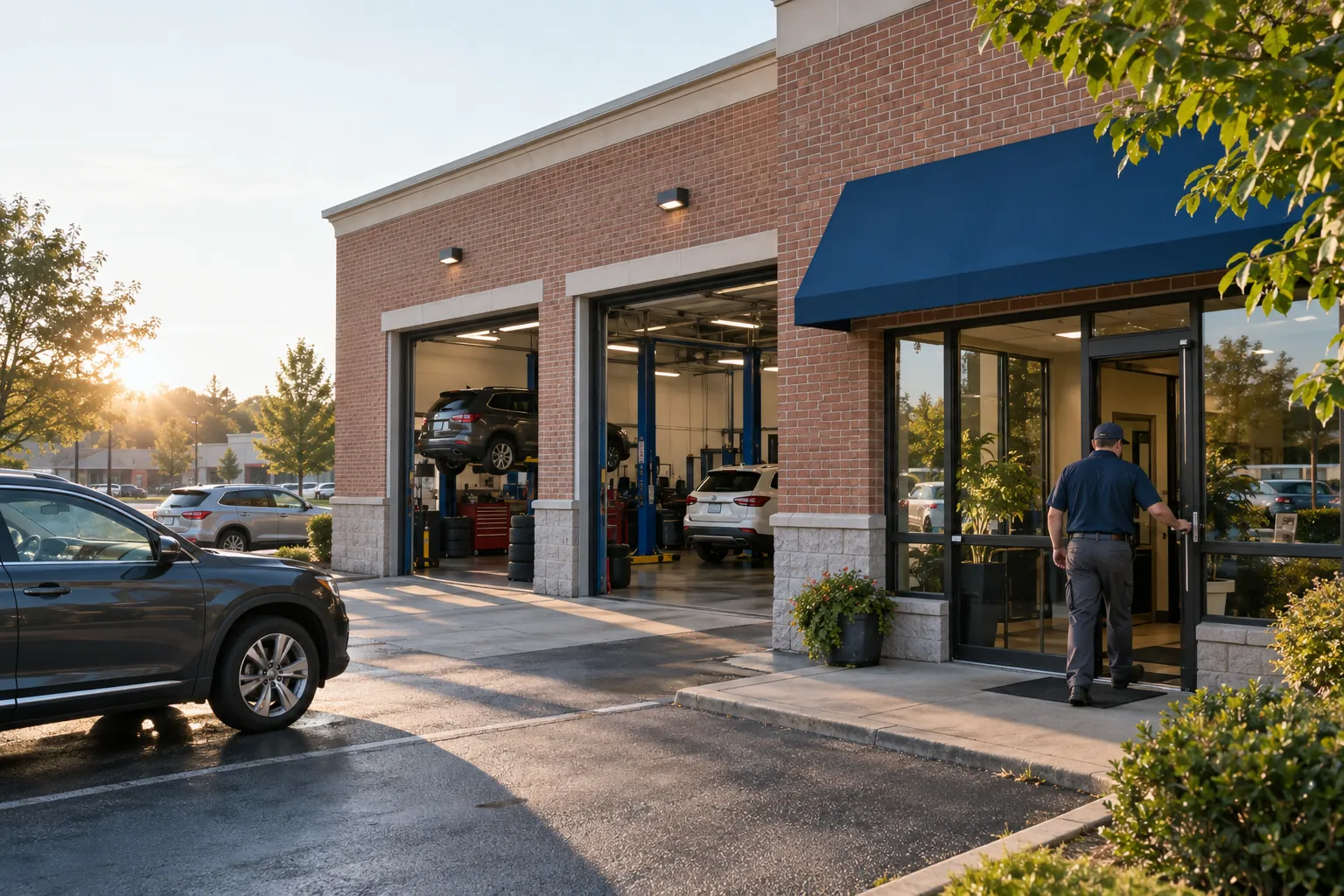
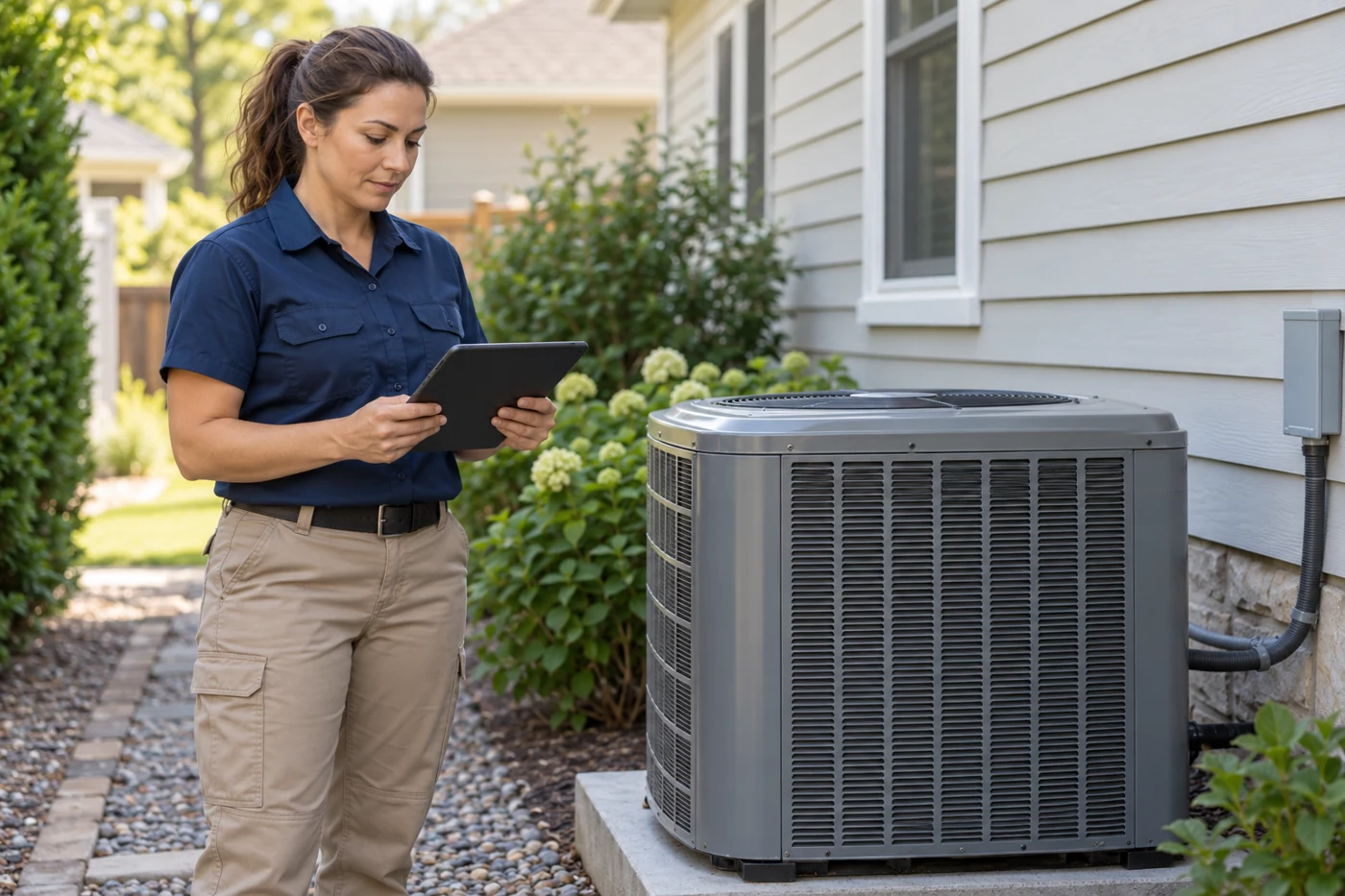
Add genuine photos of your team, vehicles, and work with appropriate permission. The generated editorial images in this guide should not be presented as your completed installations or actual staff.
Build service pages around the customer's next decision
Useful HVAC pages explain what the business can do, where it does it, and how the customer can arrange the next step. They should give the dispatcher fewer unsuitable requests and give visitors enough information to contact you confidently.
Give each page a descriptive SEO title and a clear main heading. For a company actually serving Phoenix, an AC repair page could use the title "AC Repair in Phoenix | Company Name" and the heading "AC Repair in Phoenix." This is an illustrative example: use your real brand and coverage. Include related service terms where they clarify the explanation, rather than repeating a list of keywords.
Repair pages should make contacting you straightforward
An AC repair or heating repair page should identify the systems and customer types you service, actual coverage, and the process for requesting a visit. Put a usable phone number and contact option where someone can find them on a mobile screen.
Explain how you handle urgent requests, including after-hours arrangements if offered. State relevant diagnostic or callout fees and conditions accurately when you publish them. Avoid a starting price that hides unavoidable charges or a same-day promise you cannot keep when schedules fill up.
Give people a short description of what information helps your team: ZIP code, system type if known, the issue, and a contact number. Keep explanations useful without turning the page into instructions for electrical or refrigerant work. A service page should help someone arrange an appropriate assessment.
Replacement pages should explain how an estimate is prepared
A furnace, AC, or heat pump installation page needs more than a list of brands. Explain what your assessment involves, what information affects the proposal, and what the customer will receive. Describe the equipment and installation work your company actually offers.
Use real project examples when available. With permission, describe the customer's requirements, work performed, and relevant constraints. Only publish a price, installation duration, or measured performance result when you can substantiate the figure and its context.
Keep licensing, insurance, technician qualifications, and manufacturer relationships distinct and accurate. EPA's Section 608 certification information can help you describe applicable technician certification correctly. Verify the credentials you claim rather than treating every badge as a company-wide endorsement.
Review financing, warranty, rebate, and incentive statements before publication and when programs change. For federal incentive claims, check the IRS's current Energy Efficient Home Improvement Credit information and eligible installation dates. Do not carry an older tax-credit offer into a current replacement page without confirming it still applies. Local utility offers have their own conditions.
Maintenance pages should explain the agreement
A maintenance visitor may be comparing a one-time tune-up with an ongoing agreement. Explain what each option includes, which systems it covers, how visits are arranged, and any important exclusions.
If a plan includes priority scheduling, discounts, renewal, or cancellation terms, describe the actual terms plainly. Do not imply that routine maintenance guarantees a breakdown-free system. A reader should be able to understand what they are requesting before submitting a form.
Keep residential and commercial information separate when requirements differ. A property manager needs to know whether you handle the equipment, building types, and service arrangements relevant to the property. An accurate commercial page can prevent inquiries your team cannot support.
Explain real coverage and show relevant work
A location page should help a customer understand available services and how to arrange them in an area you genuinely cover. Serving a town does not establish an office there.
Before adding a city page, gather information that gives it a purpose: services available there, genuine local work you can discuss, relevant scheduling arrangements, and questions from customers in that area. Protect customer privacy when sharing project details or photos.
If the only difference from an existing page would be the town name, improve the existing coverage information first. Google's spam policies address doorway pages and substantially similar pages created to capture related searches and send users onward. Publishing a page for every ZIP code is not a useful default.
Project evidence can support either a service page or a genuinely useful area page. Explain what the crew did and show authentic photos. Obtain permission, avoid exposing private addresses or paperwork, and do not use generated scenes as proof of completed work.
Link relevant project examples and guides to the service they support. A visitor reading about a replacement should have an easy route to the installation assessment, rather than being sent back to a broad homepage to start again.
Plan content before your next busy season
Build the schedule around your local demand and operations. Review past requests to see when repair, replacement, and maintenance inquiries typically increase. A warm-climate cooling business and a company in a colder market may need different priorities.
Prepare important pages before you expect demand to rise. Check service details, contact routes, offers, and capacity with your team. Once the calendar becomes busy, accurate availability and follow-up matter as much as attracting another visitor.
Use educational articles to answer questions that precede a service decision. Suitable subjects might include what an installation assessment covers, how to compare written HVAC estimates, or what a maintenance agreement includes. Have a qualified person review technical explanations and update them as your services change.
Avoid a large calendar of unrelated DIY problems simply because those searches appear popular. Judge a topic by whether it helps someone understand or arrange a service you provide. A comparison guide should explain factors and limitations rather than promise a particular energy saving or recommend equipment without an assessment.
During quieter periods, focus on genuine opportunities such as maintenance appointments or planned replacement assessments if they fit your business. Keep important service URLs stable. Update outdated information instead of creating a new near-identical page each year.
Check technical access and the booking process
Test the whole customer journey on a phone. Open an important service page, tap the phone number, submit a test request through the appropriate internal process, and confirm that it reaches the person responsible. Check menus, labels, and any overlays that obstruct contact details.
Make the form proportionate to the request. For an initial repair inquiry, asking for a full equipment history before anyone can contact you may add unnecessary friction. For a commercial assessment, a building or equipment question can help route the inquiry. Ask for the information your team actually uses.
State what happens after submission. A request acknowledgment and a confirmed appointment are different stages. Explain whether the team must contact the customer before a time is booked. Show a practical contact option if someone needs to follow up.

Ask the website manager to check critical pages against Google's technical requirements: Googlebot access, an HTTP 200 success response, and indexable content. Correct unintended crawl or indexing barriers early. Meeting these requirements makes a page eligible; indexing is not guaranteed.
In the correct verified Search Console property, use URL Inspection to examine an important service URL. Review the indexing explanation and Google-selected canonical where available. A live test checks current access; it does not confirm indexing or predict which canonical Google will choose.
Use clear navigation and link to priority services from relevant pages. Compress large photos while keeping them useful to view, and write accurate alternative text. If a service URL changes, coordinate the replacement and relevant redirect with the person managing the site.
Earn reviews and relevant local mentions
Make an honest review request part of your normal service follow-up. Google's review guidance explains sharing a review link. Ask about the customer's actual experience without prescribing a rating, keywords, or a script.
Use a consistent approach that does not filter requests to only satisfied customers. Google's fake-engagement policy prohibits incentives and selectively soliciting positive reviews. Do not offer a tune-up discount in exchange for a review. Reply professionally without disclosing private service details.
Keep contact and service information accurate on reputable directories that customers use. Claim manufacturer dealer listings or trade memberships only when you qualify. Check that a listing describes the real company and directs customers to the correct contact route.
Relevant links may come from genuine supplier relationships, local organizations, or a story a publication has a reason to cover. Avoid buying links that pass ranking credit or agreeing to excessive link exchanges. Google's spam policies require appropriate qualification for paid advertising and sponsorship links, such as rel="sponsored" or rel="nofollow".
Evaluate these activities by their relevance and legitimacy. A quota of unrelated directory entries or purchased links does not explain how the work helps an HVAC customer choose your company.
Measure inquiries through completed HVAC work
Define a qualified inquiry with your dispatcher. It might be a customer in your coverage area requesting a service you perform, with enough information to arrange the next step. Separate inquiries outside your area, unsupported equipment requests, spam, and duplicate contacts.
Record the source when known, requested service, location, new or existing customer, qualification, appointment status, and eventual outcome. Include cancellations and completed visits. For replacements, record the assessment, accepted proposal, scheduled installation, and completed installation separately. An accepted quote is not completed work.
Use available tracking and inquiry records to identify the source. Mark it as unknown when the evidence is missing; do not assign every website inquiry to organic search. Agree on who updates the record so cancellations and completed work are captured consistently.
A simple record could read: website organic search, AC repair, covered ZIP code, new customer, suitable inquiry, appointment confirmed, visit completed. That is an illustrative record, not a client result. It shows what a search report cannot establish on its own.
Search Console's performance report provides Google Search impressions, clicks, and query or page information. Use it to understand discovery. Connect those observations with your own inquiry and dispatch records before making claims about booked work.
Business Profile performance includes activity from organic results and Google Ads. Its calls metric counts call-button clicks, not answered calls or qualified leads. Website clicks are also interactions. Avoid adding figures from different systems and assuming every interaction is a unique customer.
Review the service mix as well as the total. More maintenance renewals from existing customers and more first-time replacement assessments describe different changes. Compare sensible periods and consider weather, seasonality, advertising, capacity, and missed calls before attributing every increase or decrease to SEO.
Use the report to choose an action. If the right visitors arrive but requests fail to reach the dispatcher, fix the contact route. If inquiries consistently concern a service you do not offer, clarify the page. If replacement assessments are relevant but seldom progress, review the estimating and follow-up process with the team.
How to evaluate an HVAC SEO provider
If you are comparing HVAC company local SEO services, ask the provider to explain its plan for your specific services and territory. The proposal should connect website and profile work with the types of requests your team can handle.
Ask these questions before hiring:
- Which services would you prioritize, and what supports that choice?
- How will repair, replacement, maintenance, and commercial inquiries be handled differently?
- How will you represent our real locations and coverage without creating false offices?
- Who implements website fixes, and who checks the technical accuracy of content?
- How will reports distinguish paid activity, organic discovery, suitable inquiries, and completed work?
- What do the fee, implementation scope, account access, and cancellation terms include?
When reviewing local SEO services for HVAC contractors, compare deliverables and responsibilities alongside price. A proposal should identify who maintains profiles, writes and approves pages, fixes technical problems, and checks that changes work. Our guide to what an SEO agency does explains that scope distinction.
Keep business ownership of the domain, website, and key accounts. Give a provider suitable access for the agreed work. Separate SEO fees from advertising spend, a website rebuild, or other services so you can assess the complete commitment.
Review case studies by asking about dates, baselines, activities, and actual inquiry outcomes. A traffic estimate or ranking screenshot alone does not establish completed installations or revenue. Google's SEO hiring guidance warns against guaranteed number-one rankings; a specialist label should not replace an explanation of the work.
A practical first 90 days
Treat this as an example work sequence, not a deadline for search results. Adapt it to the website's condition, operating capacity, and next busy period.
During the first month, confirm account ownership, real coverage, priority services, and the inquiry baseline. Test phone and form routes, correct inaccurate profile information, and resolve critical crawl or indexing barriers. Produce a short page list and a clear definition of a suitable inquiry.
During the second month, improve the most important service pages with accurate scope, contact steps, and genuine evidence. Add a location page only where it provides distinct useful information. Prepare the review-request process and relevant content needed before the next demand increase.
During the third month, review changes alongside actual service requests and dispatch outcomes. Check whether inquiries fit the intended services and coverage. Address missed contacts, unclear pages, and follow-up gaps, then choose the next improvement from that evidence.
An established website may already have much of the foundation. A business with broken contact routes or inaccessible service pages needs those problems handled before expanding its article calendar.
Frequently asked questions
What is HVAC SEO?
It is search engine optimization for heating, ventilation, and air conditioning companies. It helps people discover your real services through unpaid search results and local business information. The work includes accurate profiles, useful pages, technical access, local credibility, and measurement of relevant inquiries.
Can I do HVAC SEO myself?
You can maintain accurate business details, gather genuine project information, request honest reviews, and improve service explanations. More complex website or measurement problems may need a developer or specialist. Start with tasks you can implement and verify, then seek help where the work exceeds your team's capacity.
How much do HVAC SEO services cost?
Costs depend on the work required, locations, competition, content, technical condition, and who implements changes. Ask for a proposal that identifies deliverables, responsibilities, and additional fees. A monthly price without a clear scope makes comparisons difficult. This guide does not quote a market average or a RankVigor package price.
How long does HVAC SEO take?
Timing depends on your starting point, completed work, competition, and search systems. A repaired form can improve inquiry handling immediately; a change in search visibility may take longer. Agree on progress checks and useful business measures without relying on a fixed date for top rankings.
Do I need an HVAC page for every city?
No. A separate page should explain useful service and coverage information for people in a location you really serve. If it would repeat an existing page with a different city name, improve the existing coverage section instead. A service territory should not be represented as an office location.
Can SEO replace advertising for an HVAC company?
SEO and advertising serve different acquisition needs and have separate costs and reporting. Whether to use either or both depends on demand, budget, capacity, and actual outcomes. Unpaid visibility can support discovery, but it does not guarantee enough repair calls or replacement assessments to fill your calendar.
Choose one service and check the full journey
Start with a service you want more of in an area your team can reach. Review its page, accurate profile information, contact route, and dispatch follow-up. Confirm that a suitable prospect can understand the offer and reach the right person before expanding the plan.
For help identifying those gaps, explore RankVigor's local SEO services or request a free SEO audit.