
SEO for cleaning companies helps nearby homeowners and businesses find you when they search for a cleaner, compare a few options, and decide who to call. For most cleaning businesses, that means three things working together: an accurate Google Business Profile, a website with clear service and area pages, and a steady flow of honest reviews.
Cleaning is a trust purchase. Someone is letting a stranger into their home or office, often while they are not there. The searcher wants to know what you clean, whether you cover their street, roughly what it costs, and whether other people trusted you. Good SEO puts those answers where the search starts.
This guide is for owners of residential, commercial, and specialty cleaning businesses in the US. It covers the searches that matter, your Business Profile, service and area pages, reviews, quotes and booking, measurement, and what to ask a cleaning company SEO agency before you hire one.
Key Takeaways
- Most cleaning companies are service-area businesses, so Google expects you to hide a home address and list only the areas you actually serve, up to 20 of them.
- Build one clear page per real service (regular house cleaning, deep cleaning, move-out, office cleaning) instead of one vague "services" page.
- Area pages only help when each one says something true and specific about that area; copy-paste city pages can break Google's doorway rules.
- Reviews matter, but Google bans incentives and asking only happy customers. A neutral request after every job is the safe routine.
- Track booked jobs and quotes, not just clicks and calls. A call button tap is not a booked clean.
Match cleaning searches to the right page
Cleaning searches usually carry a service, a place, and sometimes a timing need. "House cleaning near me," "move out cleaning Denver," "office cleaning company," and "deep cleaning before a party" are four different jobs. Each one deserves a page that answers that job directly.
These examples show search intent. They are not search-volume estimates or a list of services you should offer.
| Example search | What the customer needs | Useful destination |
|---|---|---|
| house cleaning near me | A local cleaner who covers their area | Home page or main residential cleaning page |
| move out cleaning [city] | A one-time clean that meets a landlord's checklist | Move-out cleaning page |
| deep cleaning service | A detailed one-time clean and what it includes | Deep cleaning page with a task list |
| office cleaning company | A reliable commercial contract and schedule | Commercial or office cleaning page |
| [your company name] reviews | Proof before booking | Google profile and a reviews section on your site |
Start with the services that bring in most of your revenue or the work you want more of. A company that mostly does recurring house cleaning should not lead with carpet cleaning just because it sounds like a good keyword.
Be realistic about Maps. Google's local ranking guidance says results are based on relevance, distance, and prominence. You can improve relevance and prominence. You cannot make a customer 40 minutes away see you above a cleaner who is five minutes from them.
Set up your Google Business Profile as a service-area business
Most cleaning companies travel to the customer, which makes them service-area businesses in Google's terms. Google's representation guidelines say a service-area business should hide its address, and give the example of a business run from a home address that should clear it from the profile.
When you set your service area, Google lets you add up to 20 cities, postal codes, or other areas. It also says the overall area should not be more than about two hours of driving from where your business is based. List the places your teams really go. Adding every suburb in the state does not make you more relevant there.
Use your real business name exactly as it appears on your vans, invoices, and website. Google's guidelines prohibit extra information in the name, such as service descriptions or locations, and warn that it can lead to suspension. "Sparkle Home Cleaning" is fine. "Sparkle Home Cleaning – Best Maid Service Denver" is not.
For categories, Google asks you to pick as few as possible and to describe what the business is, not everything it does. A residential company will usually choose a house cleaning category as primary; a commercial company may choose a commercial cleaning category. Check the options inside your profile and choose the one that matches most of your work.
Then fill in the parts customers actually read:
- Services, using the same names you use on your website
- Hours when someone answers the phone or books jobs
- A short description that says who you clean for and where
- Real photos of your team, your vehicles, and finished work (with the client's permission)
- Booking or quote links that open the right page
RankVigor's Google Business Profile optimization guide goes deeper on each field. If your profile is set up but still does not appear, see why a business does not show on Google Maps.
Build one clear page for each real cleaning service
A single "Our Services" page with a bulleted list gives Google and customers very little to work with. A separate page for each main service lets you answer the questions that decide a booking.
A useful service page for a cleaning company usually covers:
- What is included, written as a task list (kitchen, bathrooms, floors, inside appliances, and so on)
- What is not included, so there are no surprises on the day
- Who it is for, such as tenants moving out, busy families, or small offices
- How pricing works: flat rate, hourly, by bedrooms, or by square footage, plus a starting price if you are comfortable sharing it
- What the customer needs to do before the visit
- How to get a quote or book, with one clear button
Deep cleaning and regular cleaning are a good example of why separate pages help. Customers often do not know the difference, and that confusion leads to complaints. A page that explains "a deep clean includes baseboards, inside the oven, and behind appliances; a regular clean maintains those after the first visit" answers the search and reduces disputes at the same time.
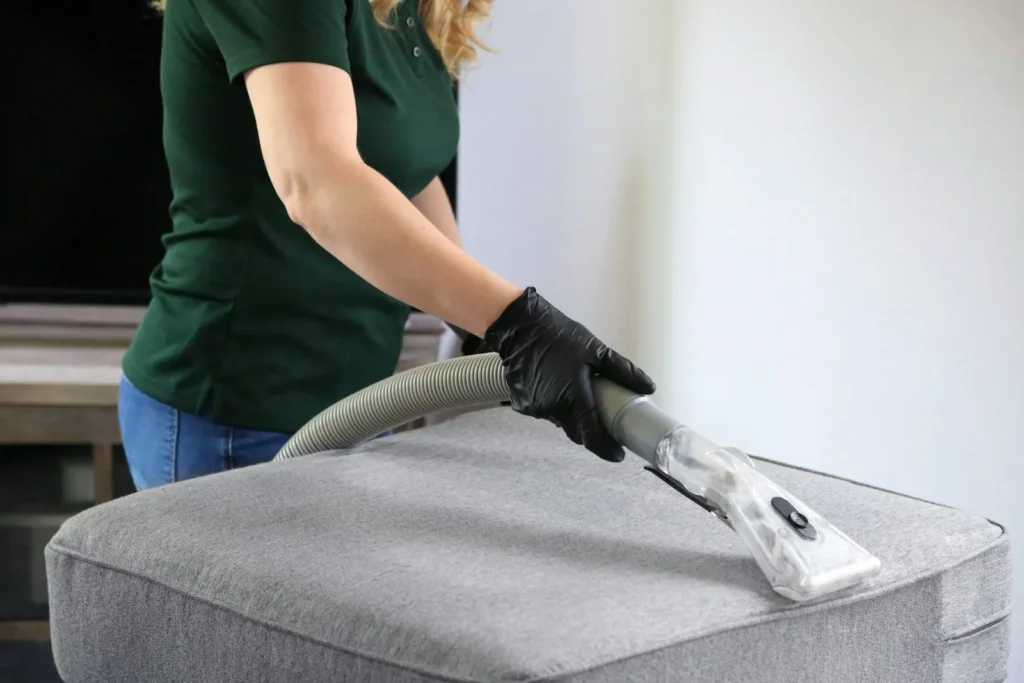
Write in the words customers use. People search "maid service" and "house cleaners" as well as "residential cleaning." Use those terms where they read naturally, and avoid repeating a city name in every sentence.
Create area pages only when you have something real to say
Area pages can help a cleaning company show up in the towns it serves, but they are also where many cleaning websites go wrong. Twenty pages that only swap the city name are thin, and Google's spam policies list pages targeted at specific cities that funnel users to one page as an example of doorway abuse.
Make an area page when you can fill it with facts about working there. Good material includes:
- Which services you offer in that area and which you do not
- Typical homes or buildings you clean there (apartments, older houses, offices)
- Scheduling details, such as which days a team covers that area
- Local notes that matter to the job, like parking or building access rules
- Reviews from customers in that area, with their permission
If you only have a sentence or two for a town, list it on a single "Areas we serve" page instead. That page is more honest and more useful than a dozen near-copies.
For multiple offices with their own staff, Google allows one profile per location. Give each real office its own page with its own address, phone number, and team details.
Earn reviews that answer the trust question
For a cleaning company, reviews do more than help rankings. They answer the question every customer has: can I trust these people in my home?
Ask every customer, not only the happy ones. Google's review policy prohibits offering discounts, free services, or other incentives for reviews. It also bans selectively soliciting positive reviews and discouraging negative ones. Reviews from current or former employees count as a conflict of interest.
A simple routine works well. After each completed job, send a short message with your review link: "Thanks for having us today. If you'd like to share how it went, you can leave an honest review here." Do not ask for five stars or tell people what to write.
Reply to reviews in a calm, specific way. Thank people for positive reviews by mentioning the job, not by pasting the same line each time. For a complaint, acknowledge it, avoid sharing private details, and move the conversation to a phone call or message. A thoughtful reply to a bad review often reassures new customers more than another five-star rating.
Make quotes and booking easy from a phone
Many people look for a cleaner on their phone. If the quote form is long, broken, or hard to find, the searcher will try the next company.
Test your own path every few months. Start from your Google profile, tap through to your website, and request a quote. Check that:
- The quote or booking button is visible without scrolling
- The form asks only what you need to give a price (size of home, service type, timing)
- The confirmation message tells the customer when you will reply
- Calls go to a phone someone answers, or to voicemail that promises a callback time
- Notifications from the form actually reach your inbox
If you use a booking or scheduling tool, make sure the link on your profile opens the correct service and area. A customer who lands on a commercial form when they wanted a one-time house clean may simply leave.
Consider Local Services Ads alongside SEO
In the US, "house cleaning services" is one of the eligible categories for Google Local Services Ads. These ads can appear above regular results and the map, and businesses that pass Google's screening can show a Google Verified badge.
Local Services Ads are paid, so they are not SEO. They can still make sense for a cleaning company that needs leads while its organic rankings build. Keep the business name, services, and areas the same in the ads account and your Business Profile, and track ad leads separately from organic ones so you can see what each channel really brings in.
Check your website basics and structured data
Your important pages must be crawlable and indexed before any of the above can help. In Google Search Console, use URL Inspection on your home page and main service pages to confirm they are on Google. Fix accidental noindex settings, broken links, and redirect chains before writing new pages.
Mobile matters a lot for this industry. Open your site on a phone and check that text is readable, buttons are easy to tap, and the page does not jump around while loading.
For structured data, Google's LocalBusiness documentation recommends using the most specific type that fits. Schema.org does not currently have a dedicated house cleaning type, so many cleaning companies use LocalBusiness or HomeAndConstructionBusiness with an accurate name, phone number, service area, and hours. Validate it with the Rich Results Test after deployment. Valid markup does not guarantee a rich result or a higher ranking.
Do not mark up testimonials on your own site expecting review stars. Google's review snippet guidelines exclude self-serving reviews for LocalBusiness and Organization types.
For a full list of technical and local checks, work through RankVigor's local SEO checklist.
Measure booked jobs, not just clicks
SEO reports full of impressions and clicks can hide whether the phone is ringing with real work. Decide what counts before you start.
Useful measures for a cleaning company include:
- Quote requests from the website, by service page
- Calls from the Business Profile and website, separated from ads
- Quotes that turned into booked jobs
- Recurring customers gained, since one weekly client is worth far more than one move-out clean
Google's Business Profile performance data shows actions like calls, direction requests, and website clicks. A call button tap is not a confirmed conversation, and a website click is not a booked clean. Keep those numbers separate from jobs in your scheduling system.
Ask new customers how they found you and record the answer. It is not perfect, but combined with Search Console and your booking data it gives a clearer picture than any single report. Account for seasonality too. Spring cleaning, holidays, and end-of-lease periods can move demand regardless of your SEO work.
Set practical priorities for the first month
Start with anything that stops a customer from booking: an unverified profile, wrong hours, a broken quote form, or a phone number that goes nowhere. Fix those first.
In the first two weeks, clean up your Business Profile: business name, primary category, service areas, services, hours, and photos. Set up the review request routine so every completed job gets the same neutral message.
In weeks three and four, improve your most important service page. For most residential companies that is regular house cleaning or deep cleaning. Add a clear task list, pricing approach, and booking button. Inspect the page in Search Console after publishing.
Keep a simple log of what changed and when. This plan is a work order, not a promise of rankings or booked jobs within thirty days.
Choose a cleaning company SEO agency by scope and evidence
Many owners can handle the profile, reviews, and basic page updates themselves. A cleaning company SEO agency can help when you have several locations, technical problems, or no time to write and maintain pages.
Before hiring, ask:
- Which searches and services will you focus on first, and why?
- Which pages will you create or change, and who approves the content?
- How will you report quote requests and booked jobs, not just rankings?
- What is included in the monthly fee, and what costs extra?
- Will we own the website, Business Profile, and analytics accounts?
Be careful with guarantees. No agency controls Google's rankings, and a promise of the number one spot says more about the sales pitch than the work. Ask for a sample report with client details removed and an explanation of how any claimed results were measured.
Frequently asked questions
What is SEO for cleaning companies??
SEO for cleaning companies is the work of helping local customers find and choose your cleaning business in Google Search and Maps. It covers your Business Profile, service and area pages, reviews, website quality, and how easily people can request a quote.
Should a cleaning company show its address on Google??
Usually not, if you do not serve customers at that address. Google says service-area businesses should hide their address and list the areas they serve instead. If you run a real office where customers visit during set hours, you can show it.
How many service areas can I add to my Google Business Profile??
Google allows up to 20 service areas, set by city, postal code, or other area type. The overall area should stay within about two hours of driving from your base.
Do I need a separate page for every city I serve??
No. Create a separate page only when you can say something specific and useful about that area. Otherwise, list the towns on one "Areas we serve" page to avoid thin, near-duplicate pages.
How long does SEO take for a cleaning business??
There is no fixed timeline. Competition in your area, the state of your website and profile, and how consistently you collect reviews all affect it. Track the work you complete and compare the same periods over time rather than expecting a fixed deadline.
Can I offer a discount for Google reviews??
No. Google's policy prohibits discounts, free services, or any incentive in exchange for reviews. Ask every customer for an honest review with no reward attached.
Start with your profile and your best service page
Pick the service you want more of, make its page clear and bookable, and make sure your Google Business Profile shows the right name, category, and service areas. Then ask every customer for an honest review. Those three steps cover most of what moves a local cleaning business forward.
If you want help finding your first priority, see RankVigor's local SEO services or request a free SEO audit. We will show you what is stopping local customers from finding and booking you.